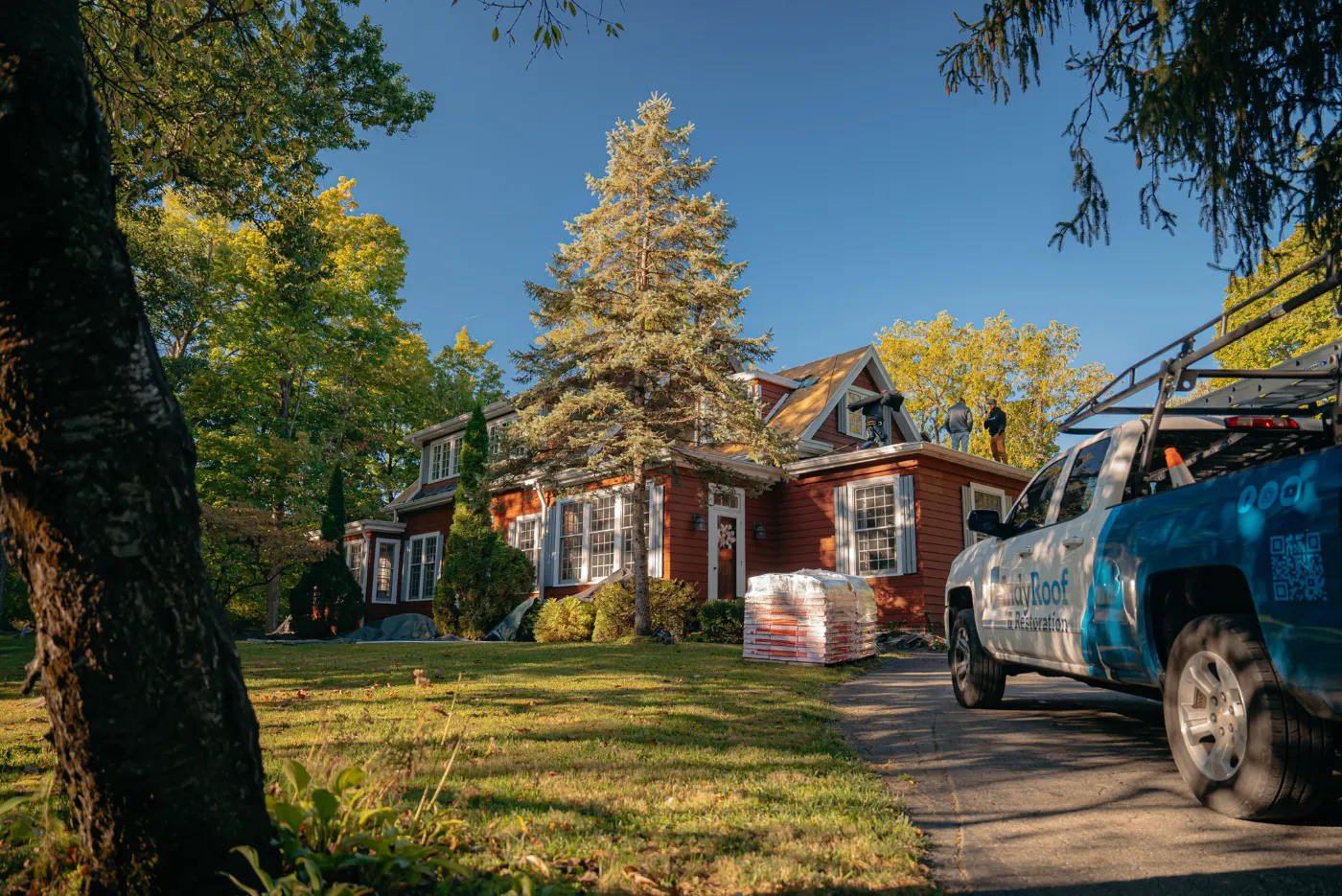
We Handle Roof Repair in Heartland Crossing, IN
Heartland Crossing Roofing provides roof inspections, repairs, and replacements for Heartland Crossing homeowners dealing with aging shingles, storm damage, or a roof that just needs a fresh set of eyes. Licensed and insured in Indiana, we offer free inspections and written estimates so you know exactly what you are getting.
If we're busy helping someone else and miss your call, we'll call you back within 15 minutes.



Heartland Crossing Roofing handles Heartland Crossing, IN roofing the way neighbors describe it: tarps down, photos taken, magnet sweep before the trucks leave. Call (317) 653-6821.
- Services: roof inspections, roof repair, emergency roof repair, roof replacement
- Service area: Heartland Crossing, Hendricks County, IN and surrounding areas
- Response: Active leaks in Heartland Crossing get priority tarping and crews; inspections scheduled fast
- Licensed and insured (License #RC21100059)
- Serving Heartland Crossing, IN since 2018
Schedule Your Free Roof Inspection
A proper roof inspection in Heartland Crossing is not a five minute glance from the driveway. We climb the roof when it is safe, walk the field, and check the shingles for hail bruising, cracking, curling, and granule loss. We look at flashing around chimneys, skylights, and sidewalls, at valleys and penetrations, and at the ridge and eaves for wind lift or nail pops. Attic ventilation and any interior staining get checked too, because the story on the roof often shows up inside first. Every finding is documented with photos so you can see what we see, not just take our word for it. Catching a lifted shingle or a failed pipe boot early is what keeps a small Heartland Crossing roof problem from turning into a much more expensive one.
I agree to be contacted by Heartland Crossing Roofing regarding my inquiry.
Nail pops telegraph through Heartland Crossing roofs one shingle at a time. A fastener backs out a quarter inch, tents the shingle above it, and opens a path that works wider with every freeze. From the ground it reads as a shadow. Up close it is a hole in progress. Hendricks County roofs at the decade mark usually carry a scatter of them, each a small fix now and a deck stain later.
Decking gets probed and photographed before Heartland Crossing Roofing prices a Heartland Crossing roof, and replaced where it is soft, with pictures before the new plywood covers the evidence. Rot hides under presentable shingles all the time, so our estimates state the decking allowance up front and surprises arrive with a price cap already attached. Hendricks County homeowners approve changes from photographs, never from descriptions.
Just need a tarp, fast, from someone who will not disappear after? Heartland Crossing Roofing runs standalone emergency tarping across Heartland Crossing, including roofs we did not install and will not be quoting. Call (317) 653-6821. The interim protection goes on right, the photos go in your file, and across Hendricks County the tarp visit comes with zero pitch attached.
Payment Options That Work for You
A major roof project is rarely a planned expense. Our lender partners offer terms that fit a range of budgets so you can move forward while insurance settles. Ask Heartland Crossing Roofing for current rates.
Pay for your project at a later time, but lock in today's pricing. Ideal for homeowners waiting on insurance settlements.
- No payments for 12 months
- No interest if paid in full
- Lock in current pricing today
Divide your project cost equally across 12 months with zero interest. Most homeowners choose this option for predictable budgeting.
- Equal monthly payments
- 0% interest for 12 months
- Simple, predictable budgeting
Spread your investment over up to 20 years with fixed equal payments. The right choice for larger projects or homeowners who prefer lower monthly amounts.
- Up to 20-year terms available
- Fixed equal payments
- Ideal for larger projects
Financing provided by Slice, Foundation Finance, Regions. Subject to credit approval. Rates, terms, and promotional periods are set by the lender and disclosed in writing before you sign.
Roofing Done Right in Heartland Crossing
Heartland Crossing Roofing takes on the whole range of roofing work, inspections, repairs, and full replacements, using manufacturer-certified crews and documenting it clearly.
Roof Inspections in Heartland Crossing
Free on site inspections for Heartland Crossing homeowners, covering shingles, flashing, valleys, penetrations, and signs of storm or age damage. Findings are documented with photos and a written summary.
Learn moreRoof Repair in Heartland Crossing
Targeted repairs for Heartland Crossing roofs, including lifted or torn shingles, damaged flashing, failed pipe boots, and localized storm damage. Work is scoped in writing before it starts.
Learn moreEmergency Roof Repair in Heartland Crossing
Priority response for active leaks and storm damage on Heartland Crossing homes, including tarping and temporary weather protection to stop further damage while a full repair or claim is worked out.
Learn moreRoof Replacement in Heartland Crossing
Full tear off and replacement for Heartland Crossing roofs at the end of their service life or beyond repair, including new underlayment, flashing, and shingles with clean site protection and cleanup.
Learn moreDesigner Roofing in Heartland Crossing
Upgraded shingle profiles and premium roofing options for Heartland Crossing homeowners who want a distinct look, coordinated with HOA architectural guidelines and the existing roof lines.
Learn more
Local Expertise, Real Results
Valleys, step flashing, and pipe boots are where roofs leak, so that is where the extra hour goes.
Every Heartland Crossing Roofing roof in Heartland Crossing starts with a free inspection and a written scope, and ends with a photo-documented walkthrough and a warranty registered in your name. The middle is manufacturer-spec installation, photographed as it happens.
Heartland Crossing Roofing serves Heartland Crossing and the surrounding Hendricks and Morgan County communities, including Camby, Plainfield, Mooresville, Brownsburg, Avon, and Decatur Township. Founded in 2018 by Aaron Christy, the company has spent years focused on roofing across central Indiana, so the crews know how homes in this pocket southwest of Indianapolis actually weather. Our teams are licensed and insured under Indiana license RC21100059, and they show up local, on time, and ready to work. Whether you are near The Links at Heartland Crossing Golf Course or tucked back on a quieter Heartland Crossing cul de sac, you get the same straightforward service.
The way we work in Heartland Crossing is simple. Every job starts with a hands on inspection where we walk the roof, check the shingles, flashing, valleys, and penetrations, and document what we find with photos you can actually see. From there you get a written estimate with a clear scope, so line items match the roof, not a template. Aaron has been featured on FOX59, WISH TV, and RTV6 talking about honest roofing work, and that same honesty runs through the crews. No pressure, no upsells on things your roof does not need, and clean workmanship when the job is underway.
Our Promise
Every Heartland Crossing homeowner gets three things from Heartland Crossing Roofing. First, a free on site inspection before we talk about any work, because you deserve to know what is actually happening on your roof. Second, an honest written estimate with a clear scope and transparent line items tacked on later. Third, clean workmanship backed by a workmanship warranty on top of the standard manufacturer coverage that comes with your shingles.
Chosen by Heartland Crossing Homeowners for a Reason
Homeowners across Heartland Crossing and Hendricks County get thorough inspections, good materials, and prices we're upfront about.
Built For Storm Season
Central Indiana sits in a high frequency severe weather corridor, and spring hail plus 60 mph wind gusts do real damage to shingles. When storms roll through, we prioritize inspection requests and get eyes on the roof while the evidence is still fresh. You get clear photos and a straight answer on whether you have a claim worth filing.
Heartland Crossing Roof Knowledge
A lot of Heartland Crossing homes were built between 1998 and the mid 2010s, which puts many original roofs in that 20 to 25 year window. We know what the original 3 tab and early architectural shingles look like when they are near the end, and we know the gable and hip layouts common in the newer sections. That local pattern recognition speeds up the conversation.
Full Scope Roofing
From the first inspection through the final walkthrough, one company handles it. Inspection, repair, emergency tarp work, full replacement, and designer options are all under Heartland Crossing Roofing. You are not juggling multiple contractors trying to hand off blame when something needs attention.
Documentation Done Right
Insurance work lives or dies on documentation, and in Heartland Crossing that matters after every hail or high wind event. We photograph damage clearly, note locations, and give you an organized packet you can hand to your carrier. That makes the claim conversation smoother from day one.
Real Jobs. Real Results.
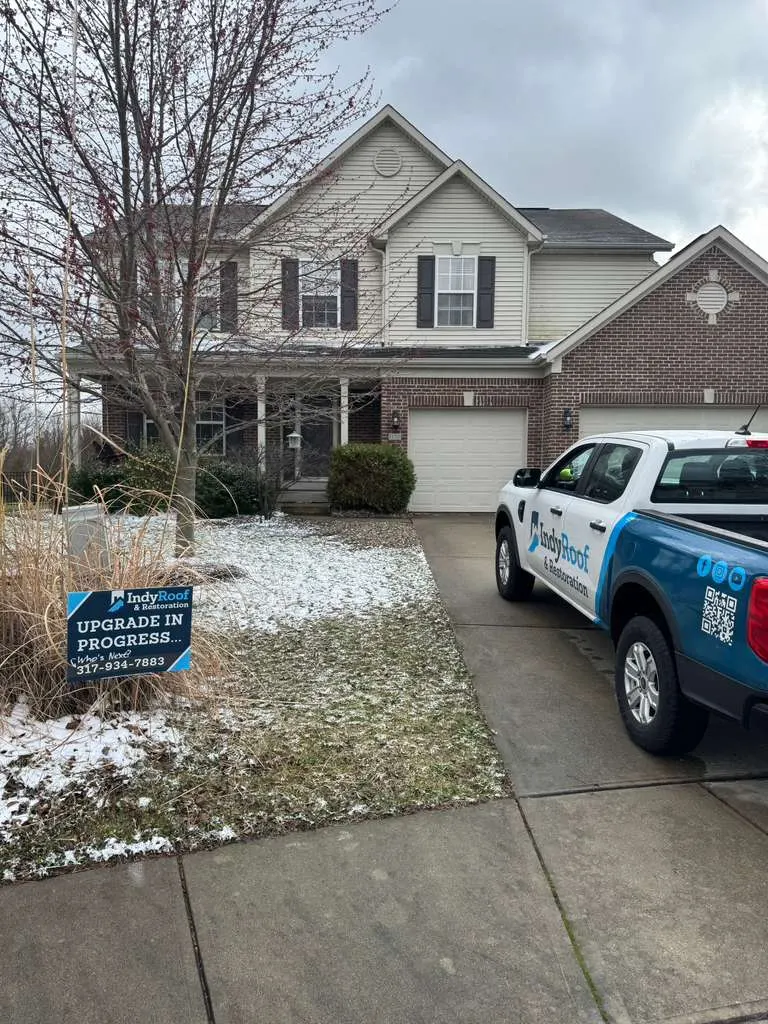
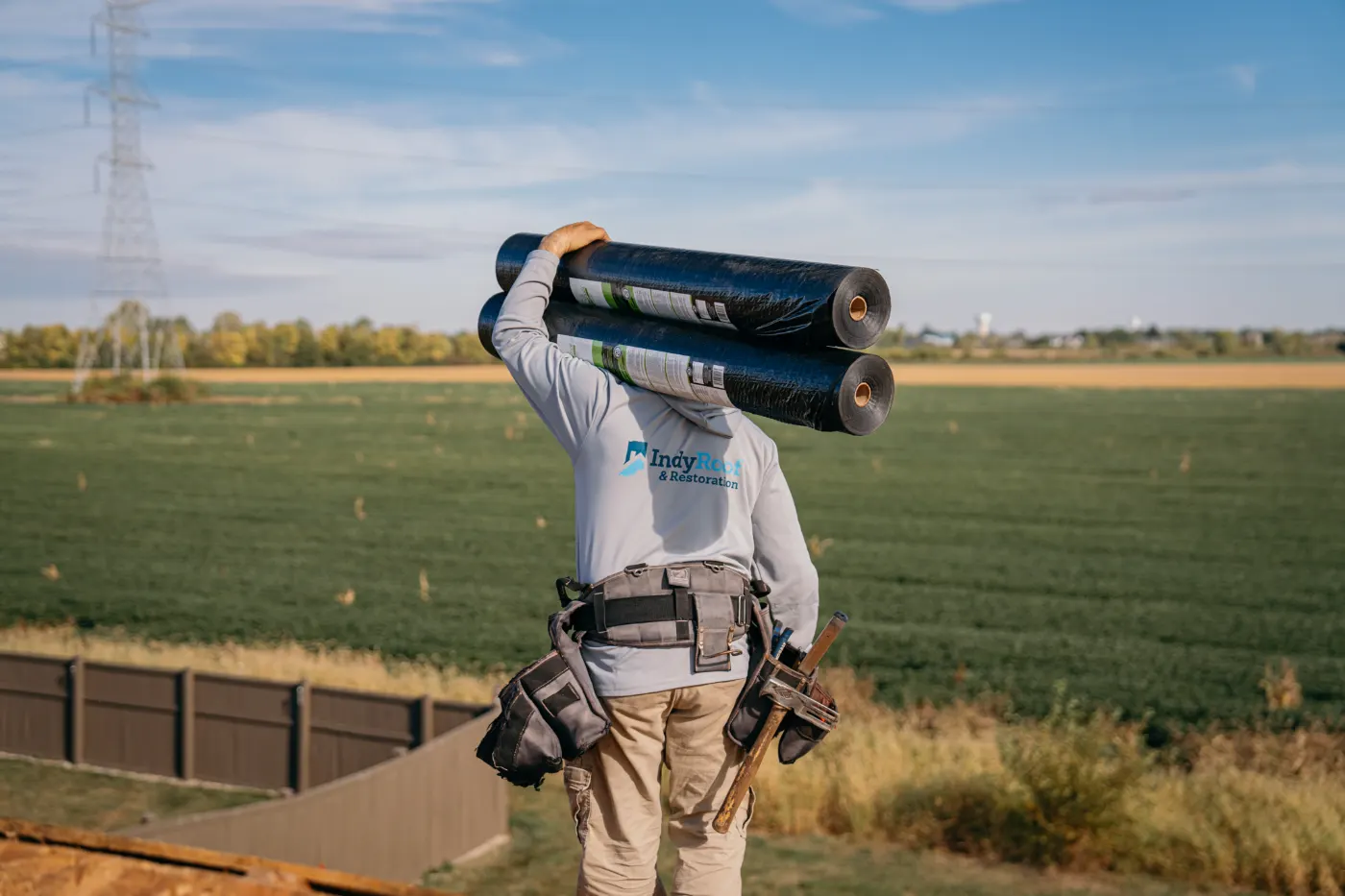
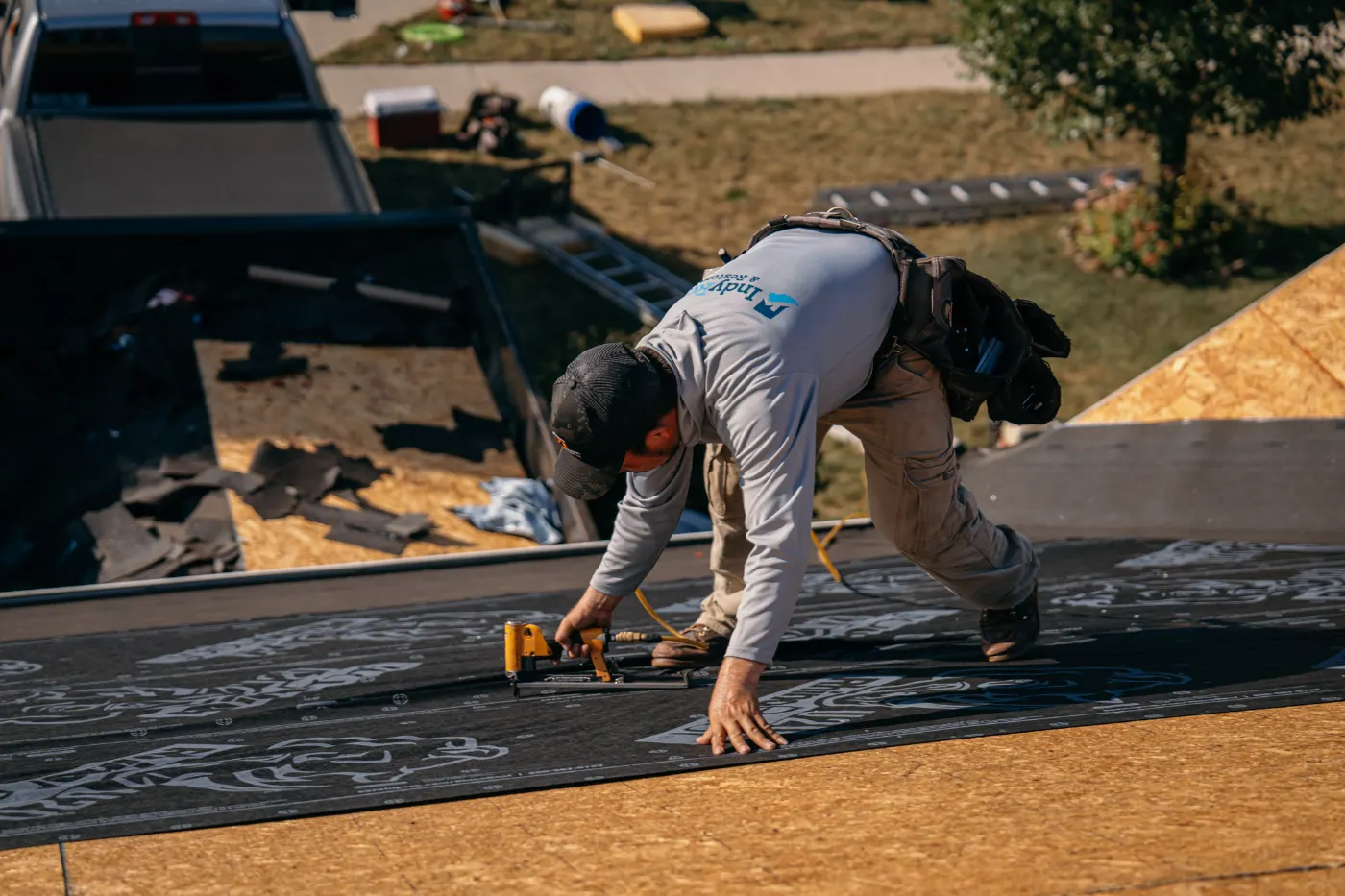
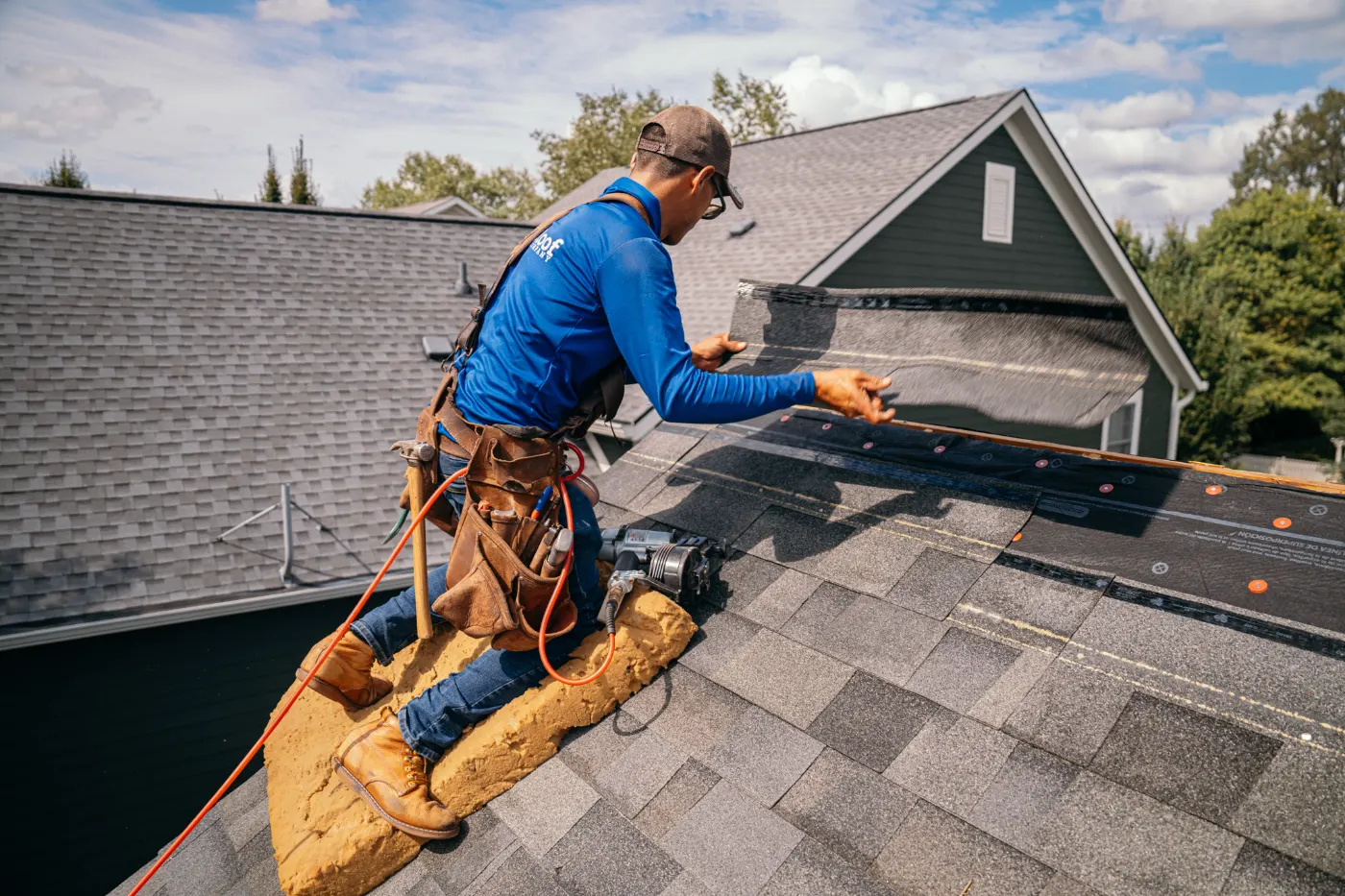
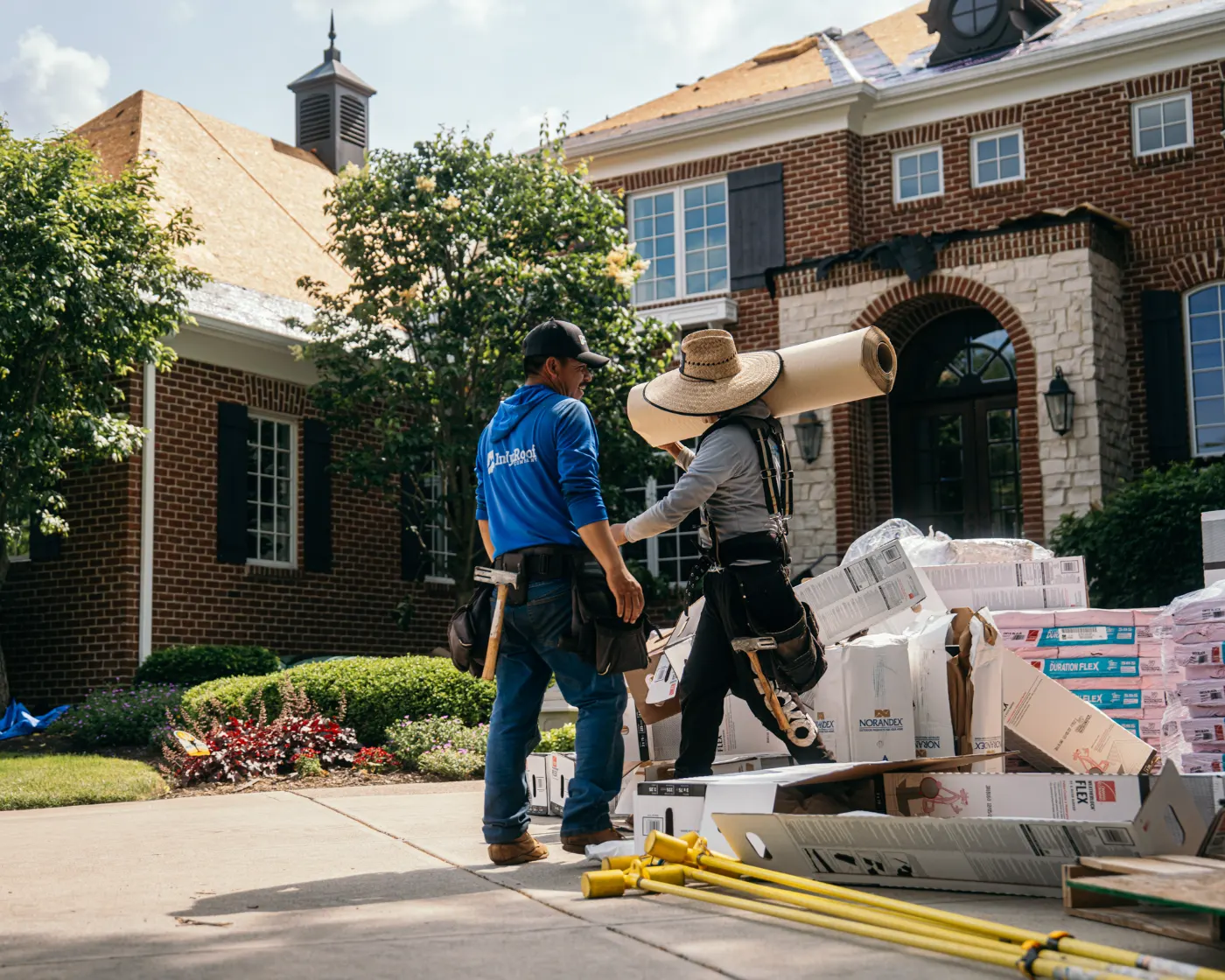
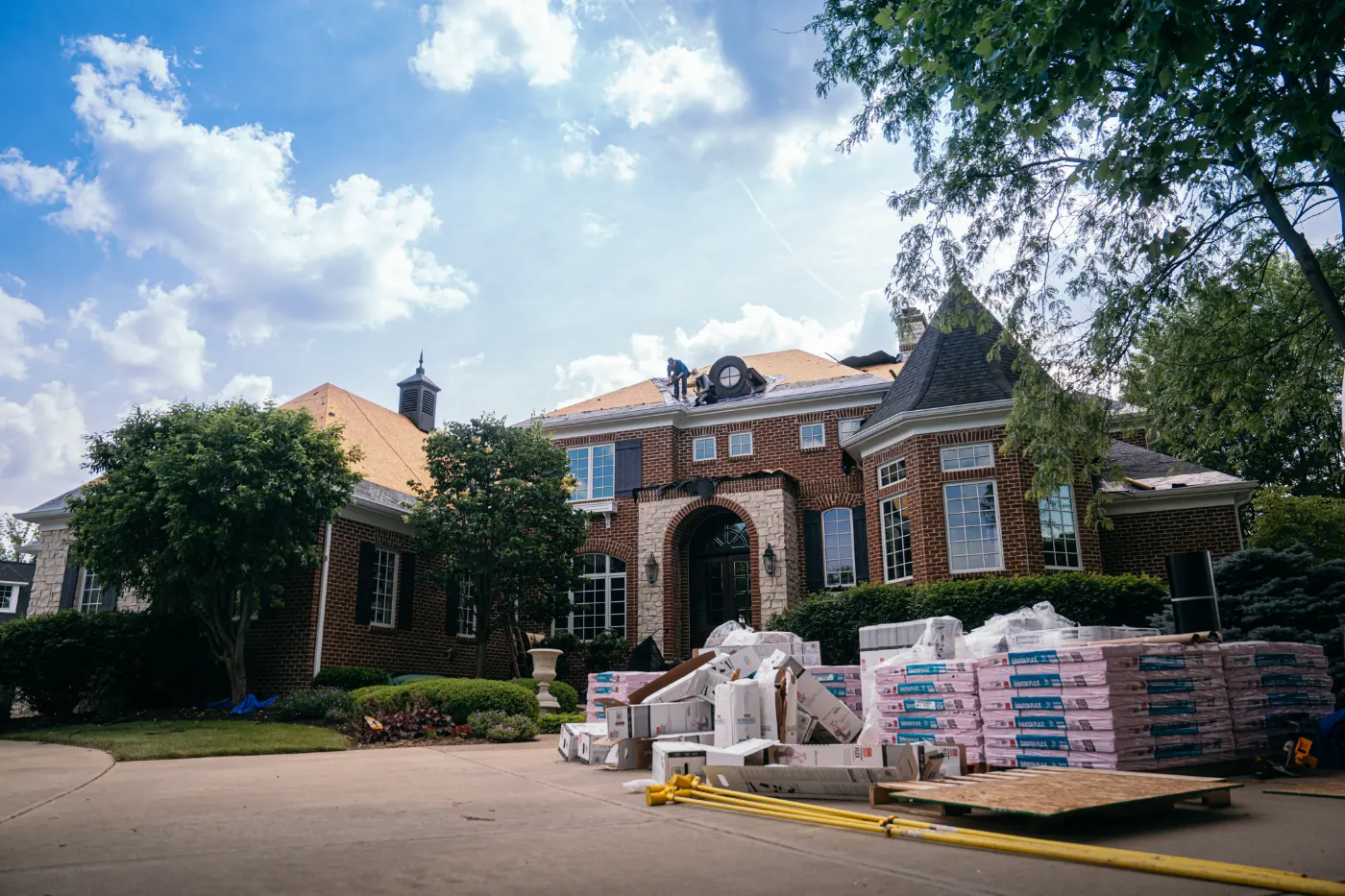
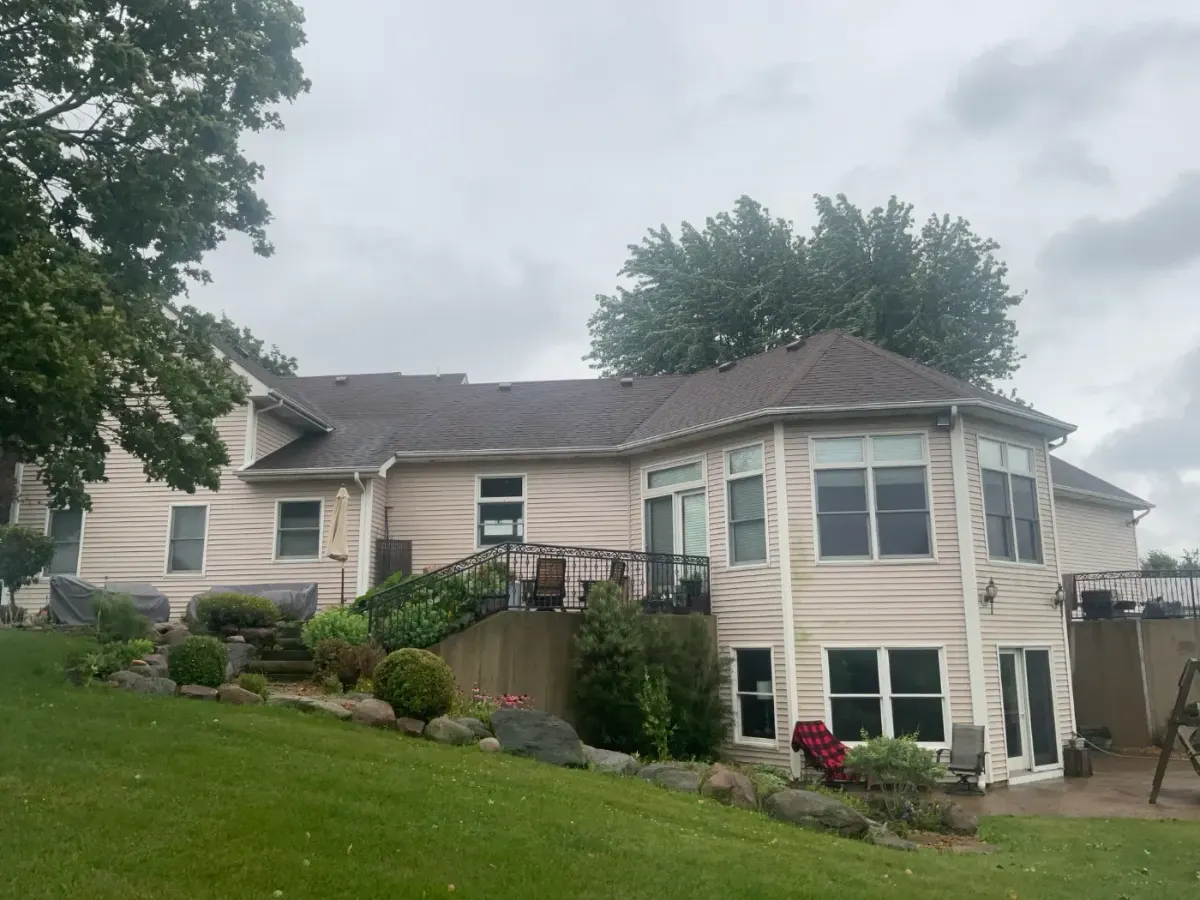
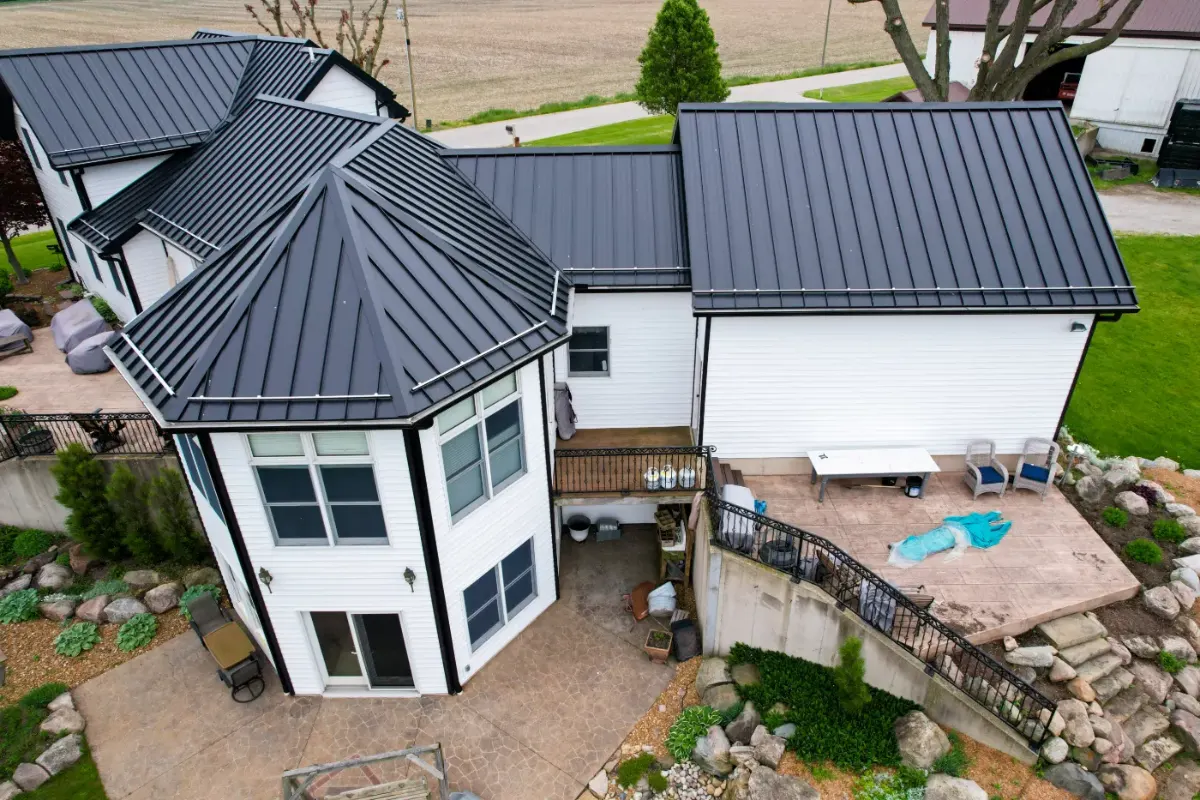
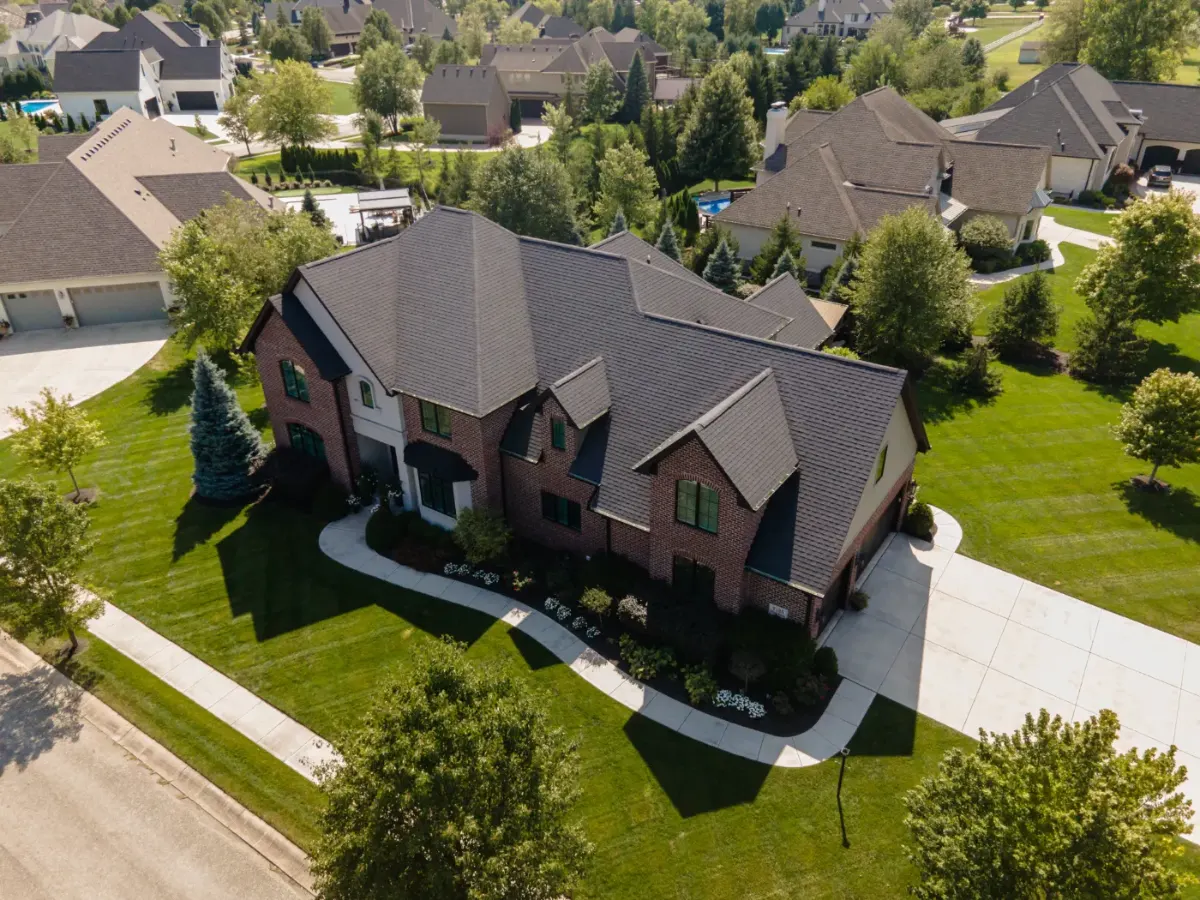
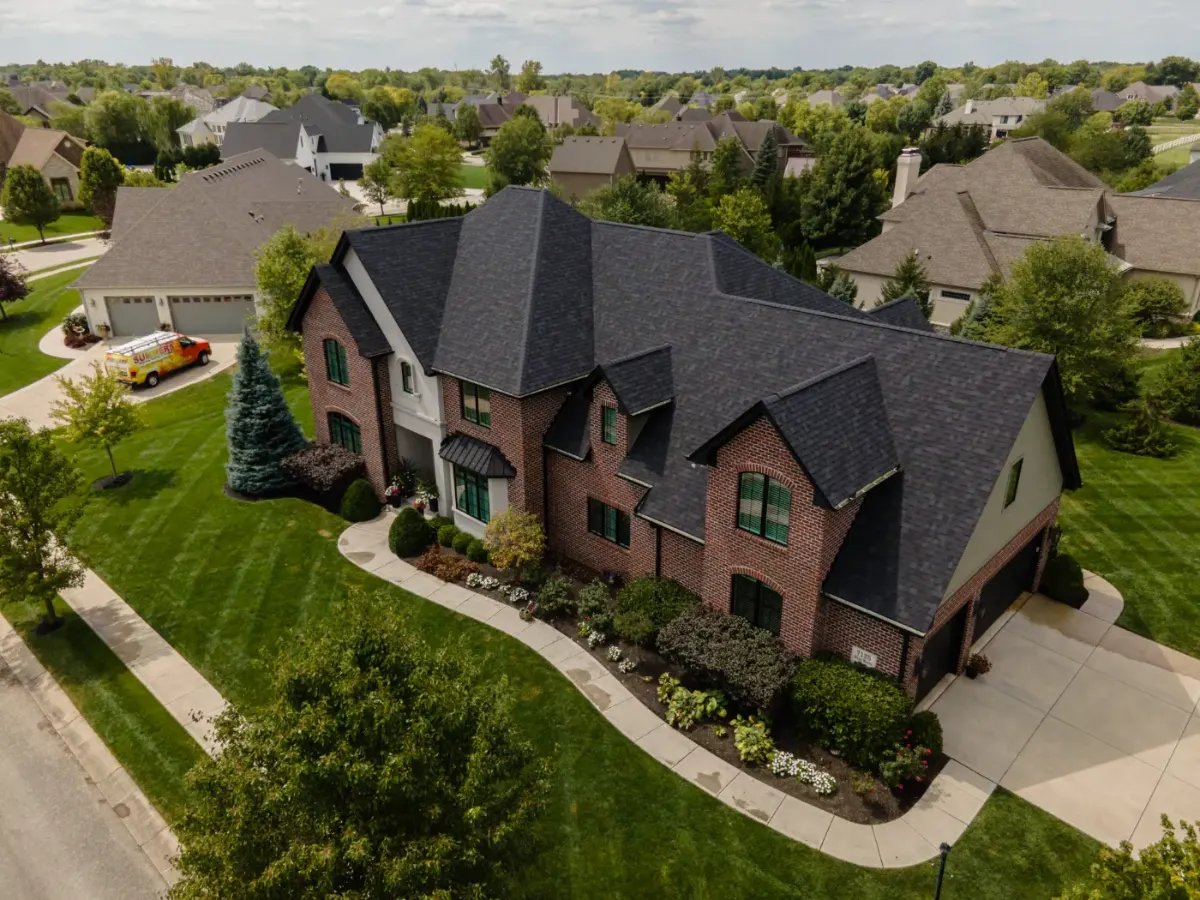
Photos from recent roofing projects completed by our manufacturer-certified crew across Heartland Crossing and Hendricks County. Every project is documented with photos and a written closeout package.
Where a Heartland Crossing Roof Project Begins
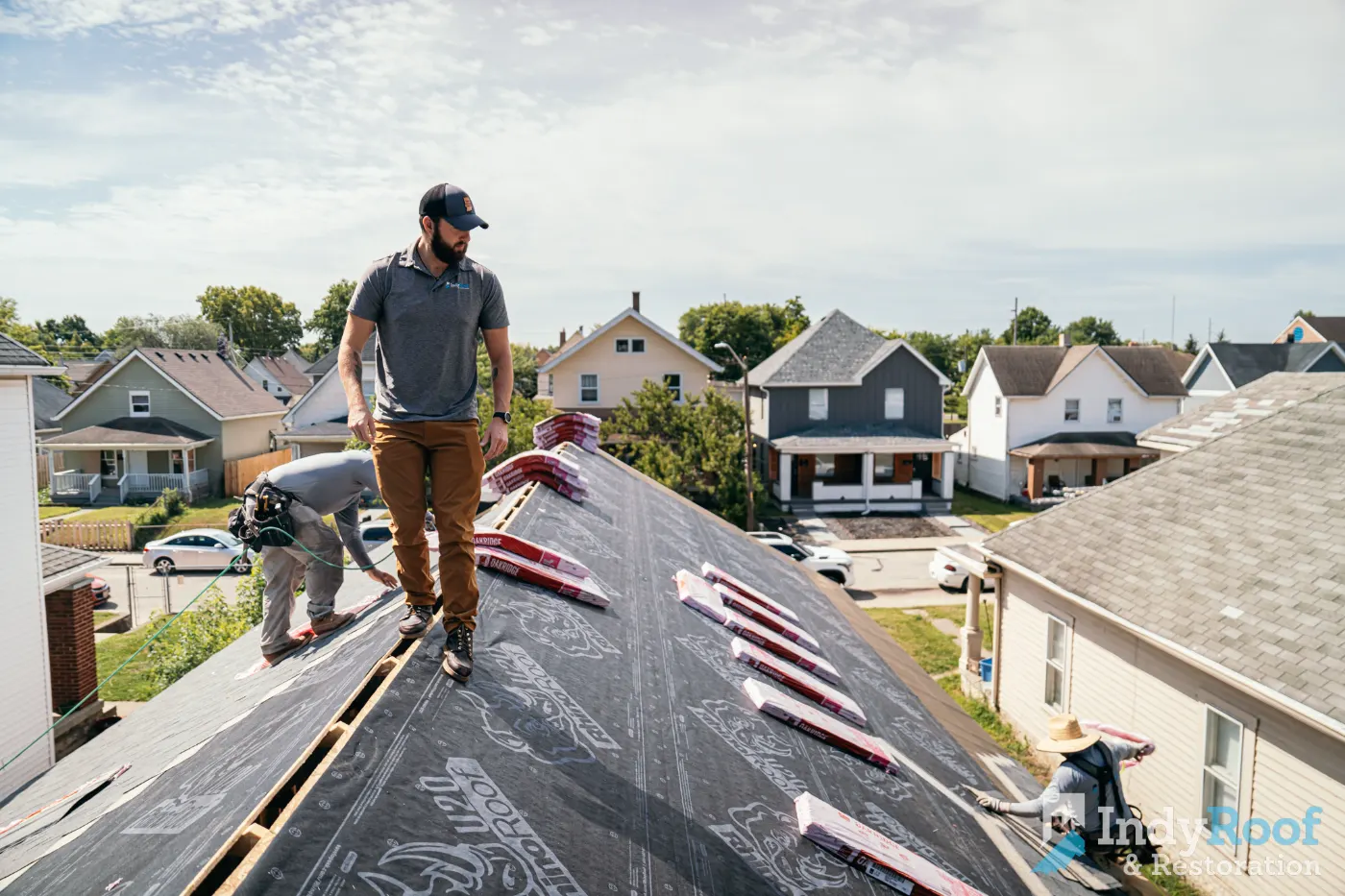
It starts with an on site walkthrough of your Heartland Crossing roof. A crew member climbs the roof when conditions allow, checks the shingle field, flashing, valleys, penetrations, and eaves, and looks for signs of storm impact or age related wear like granule loss and curling. We photograph everything, including any bruising, tears, or exposed nails. Before we talk about work, you get a clear picture of the roof's actual condition and a scope that matches what the roof needs. No pressure, no scare tactics, just what is there.
Next comes the estimate and, if there is storm damage, the insurance step. Your written estimate lays out materials, labor, and scope in plain terms so nothing is buried. If the damage looks claim worthy, we organize the photos and documentation so you can file cleanly with your insurance carrier, and we can meet the adjuster on the Heartland Crossing property to walk the roof together. works with your insurance carrier, and we do not tell you what your policy covers, that is between you and your carrier.
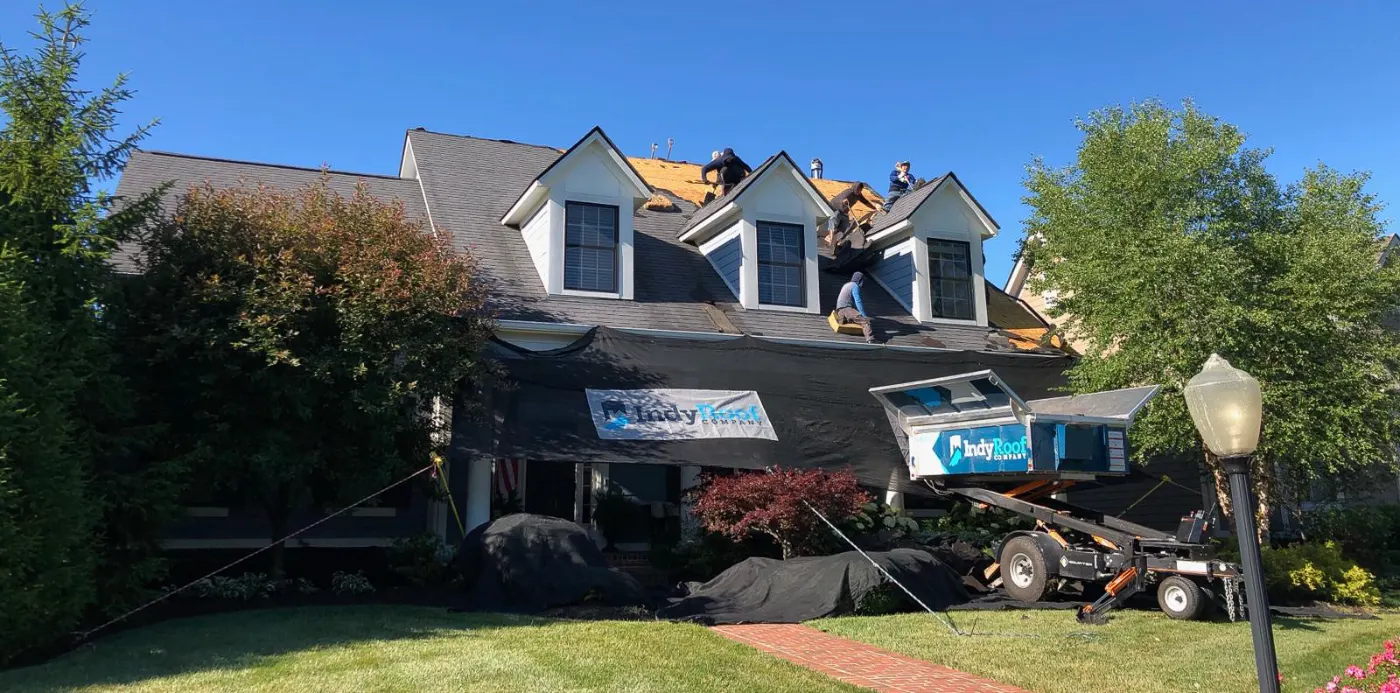
Once the scope is approved, we schedule the work at a time that fits your Heartland Crossing household. On install day, the crew protects landscaping and siding, tears off and replaces the roof cleanly, and keeps the site organized. We run a magnet for stray nails and haul off debris the same day when possible. At the end, you get a final walkthrough where we point out what was done, hand over any paperwork, and make sure the yard looks like we were never there.
Free Inspection With Photos
We climb the roof, check the field, flashing, and penetrations, and photograph the findings. You get to see the actual condition, not a verbal summary. No cost, no obligation to move forward.
Honest Written Estimate
Your estimate lists materials, labor, and scope in plain language. Transparent line items appear later, and if something changes mid job, you know before it happens. Clear numbers, clear scope.
Insurance Documentation
For storm claims across Heartland Crossing, we organize photos and notes so you can file cleanly with your insurance carrier. We can meet the adjuster on site to walk the roof. works with your insurance carrier, that stays between you and your policy.
Clean Workmanship, Final Walkthrough
The crew protects the property, keeps the site tidy, and runs magnets for stray nails. Your workmanship warranty is explained at the end. Nothing is finished until we walk it with you.
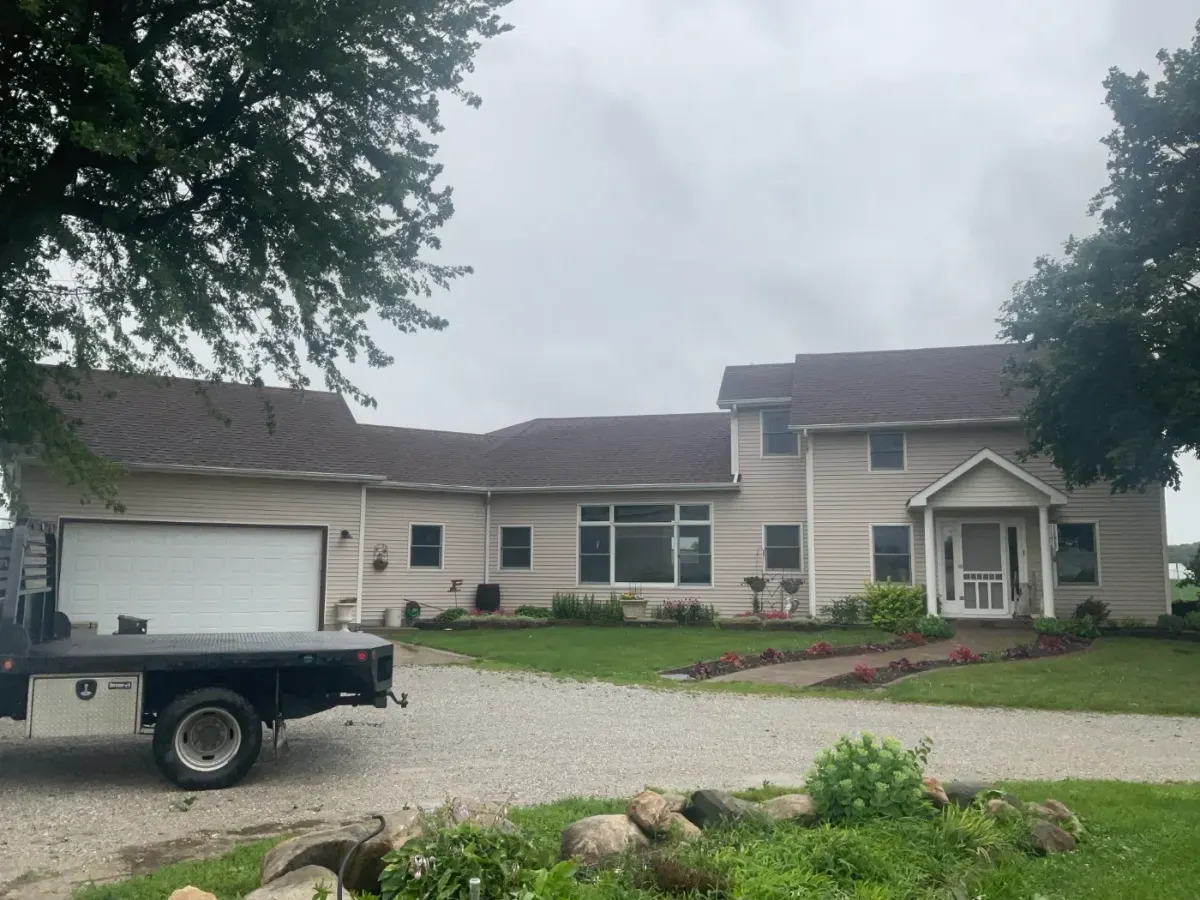
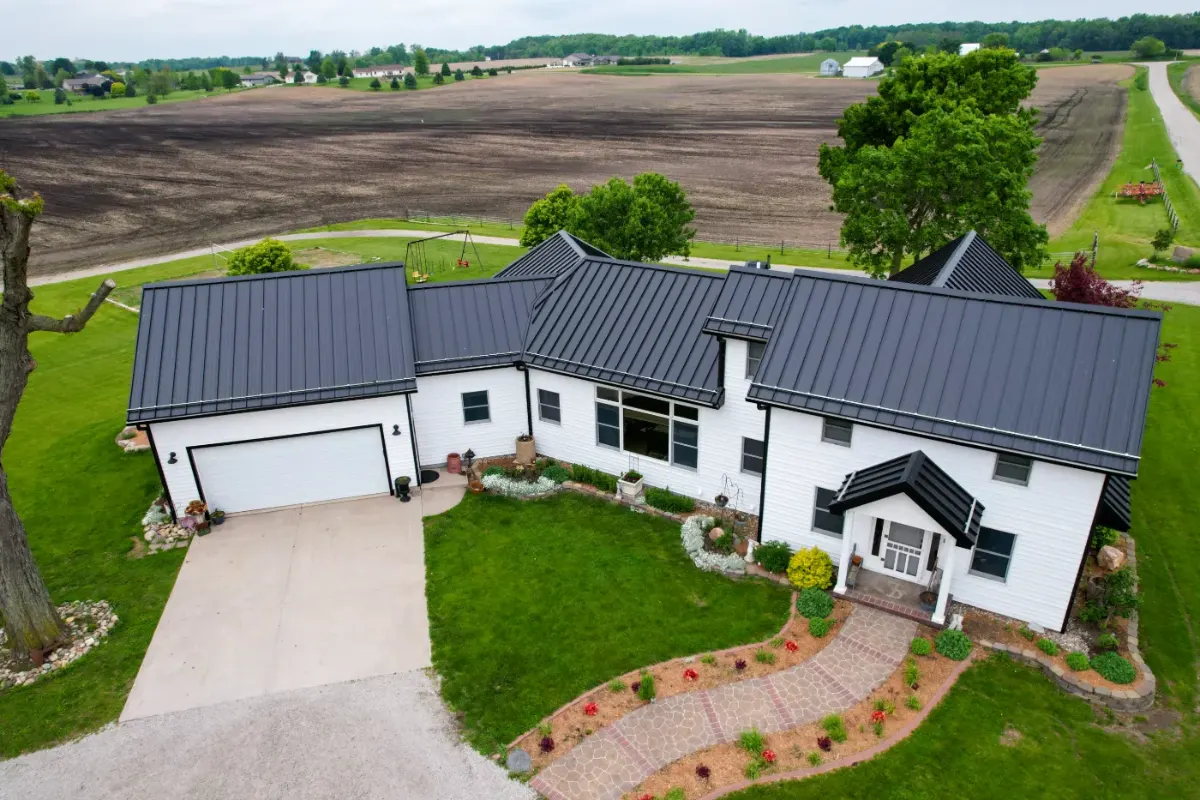
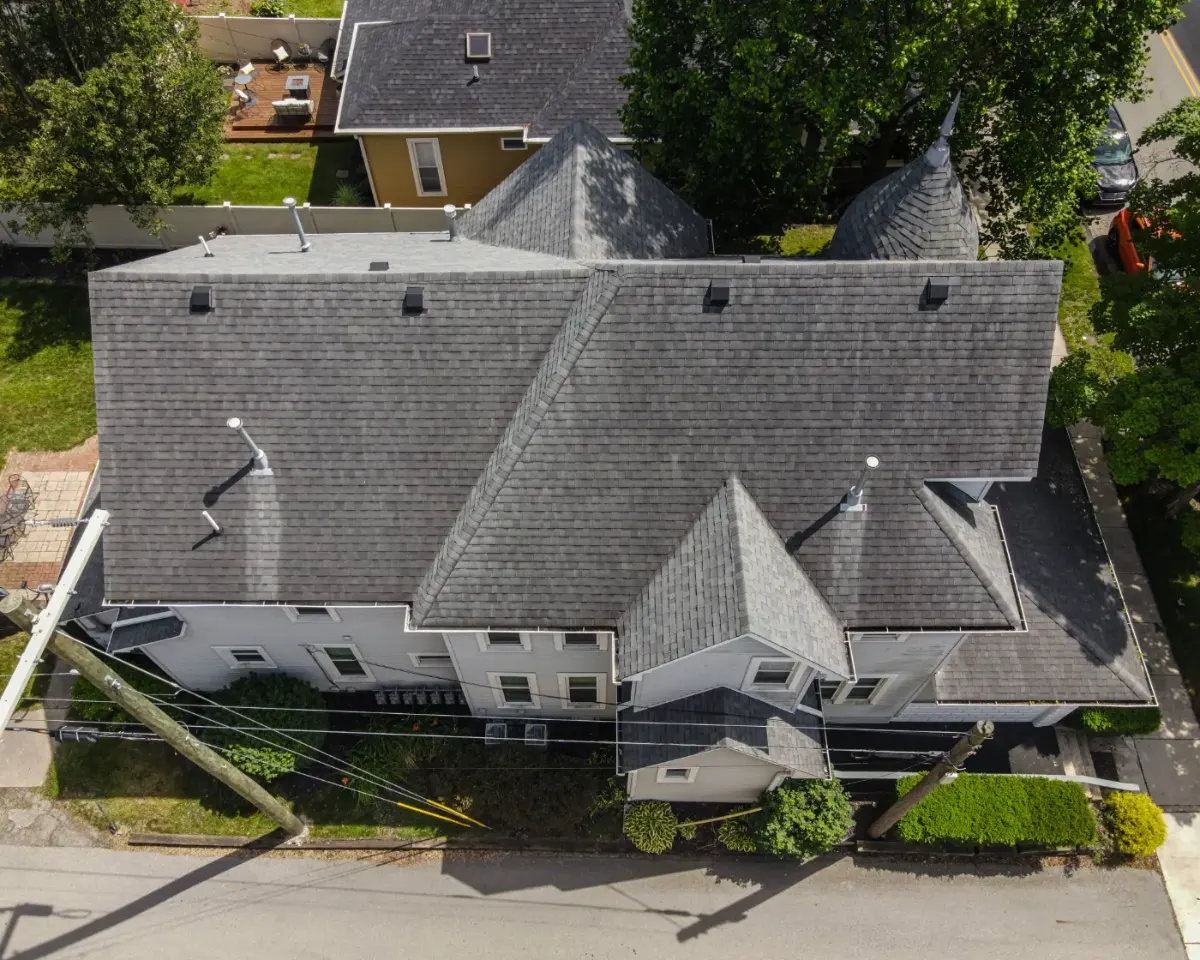
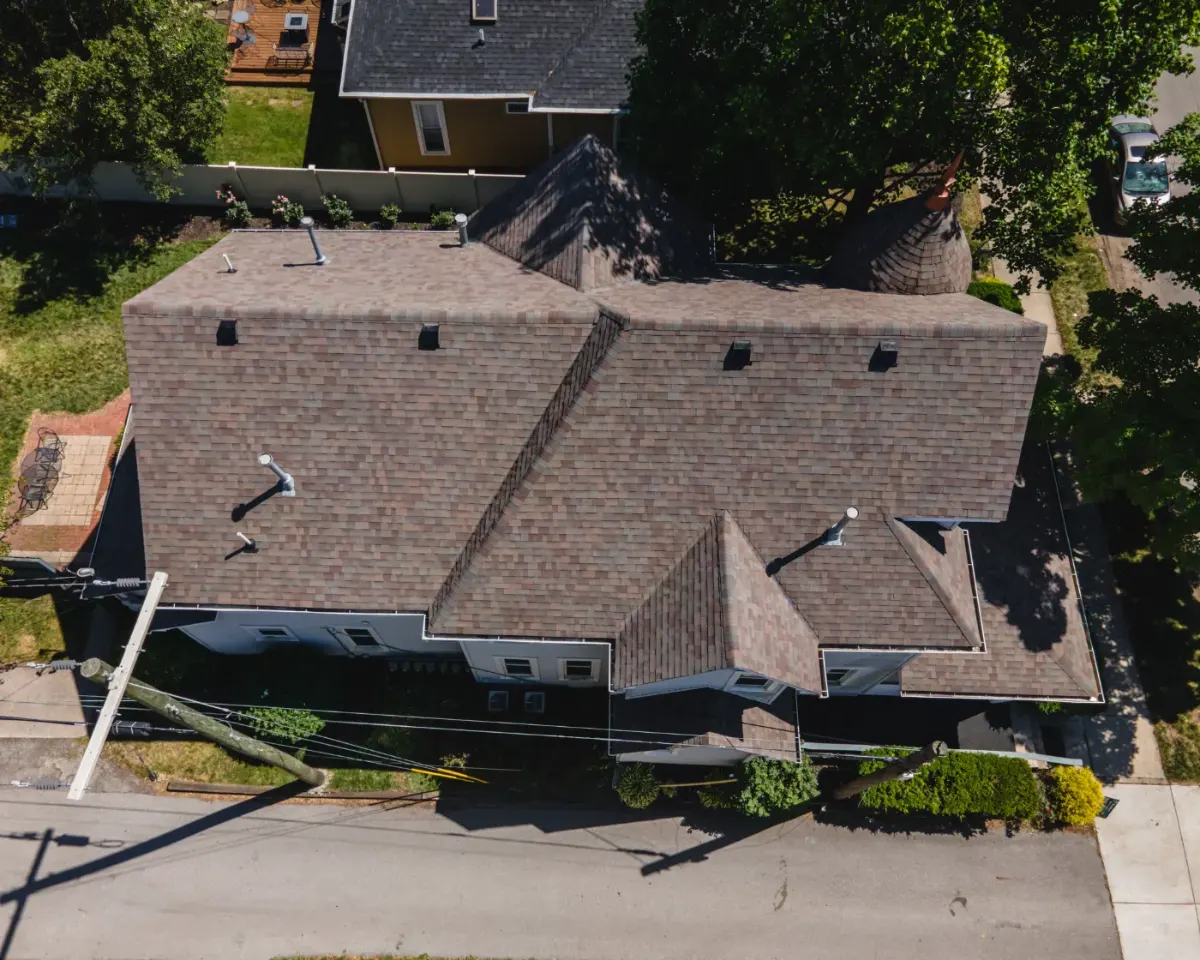
Recent Heartland Crossing Roofing Projects
5 before-and-after projects documented for the homeowner and the homeowners insurance carrier.
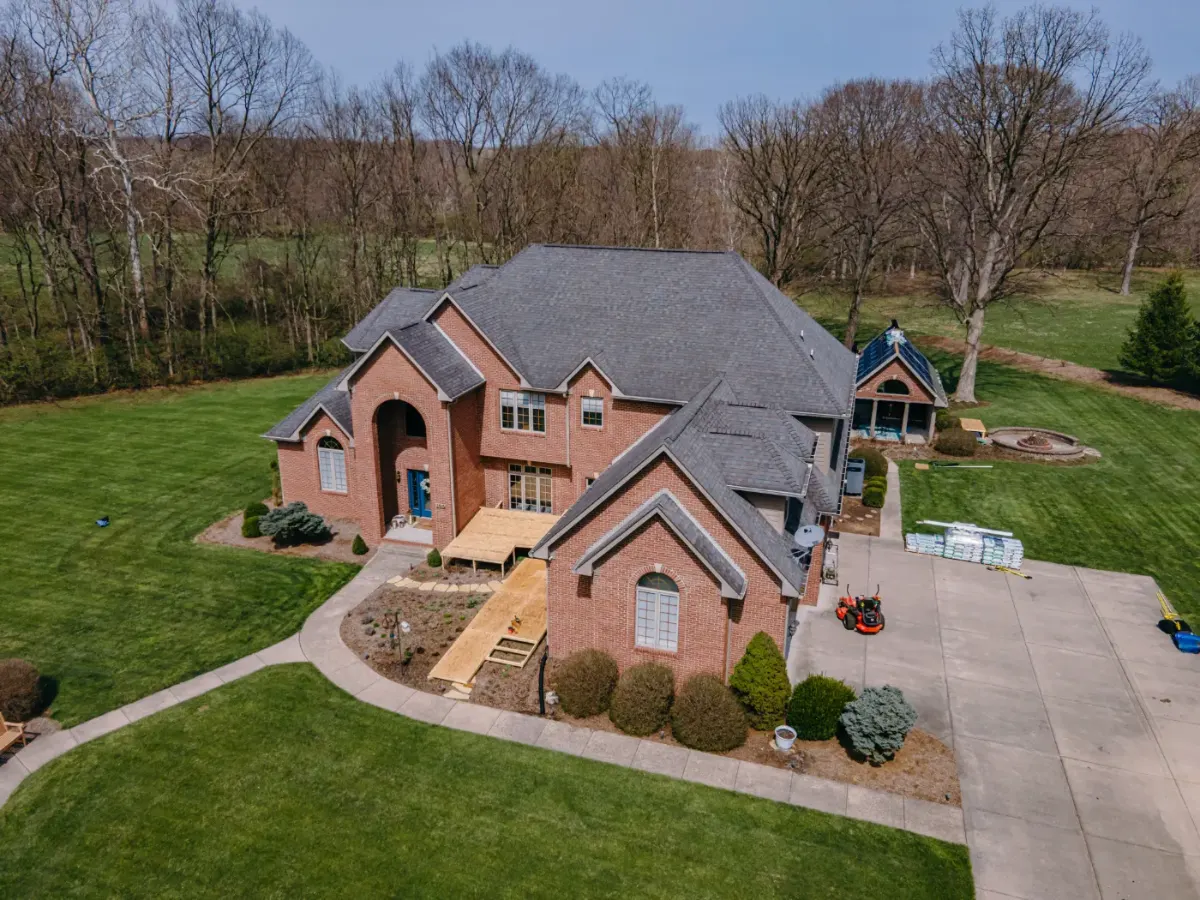
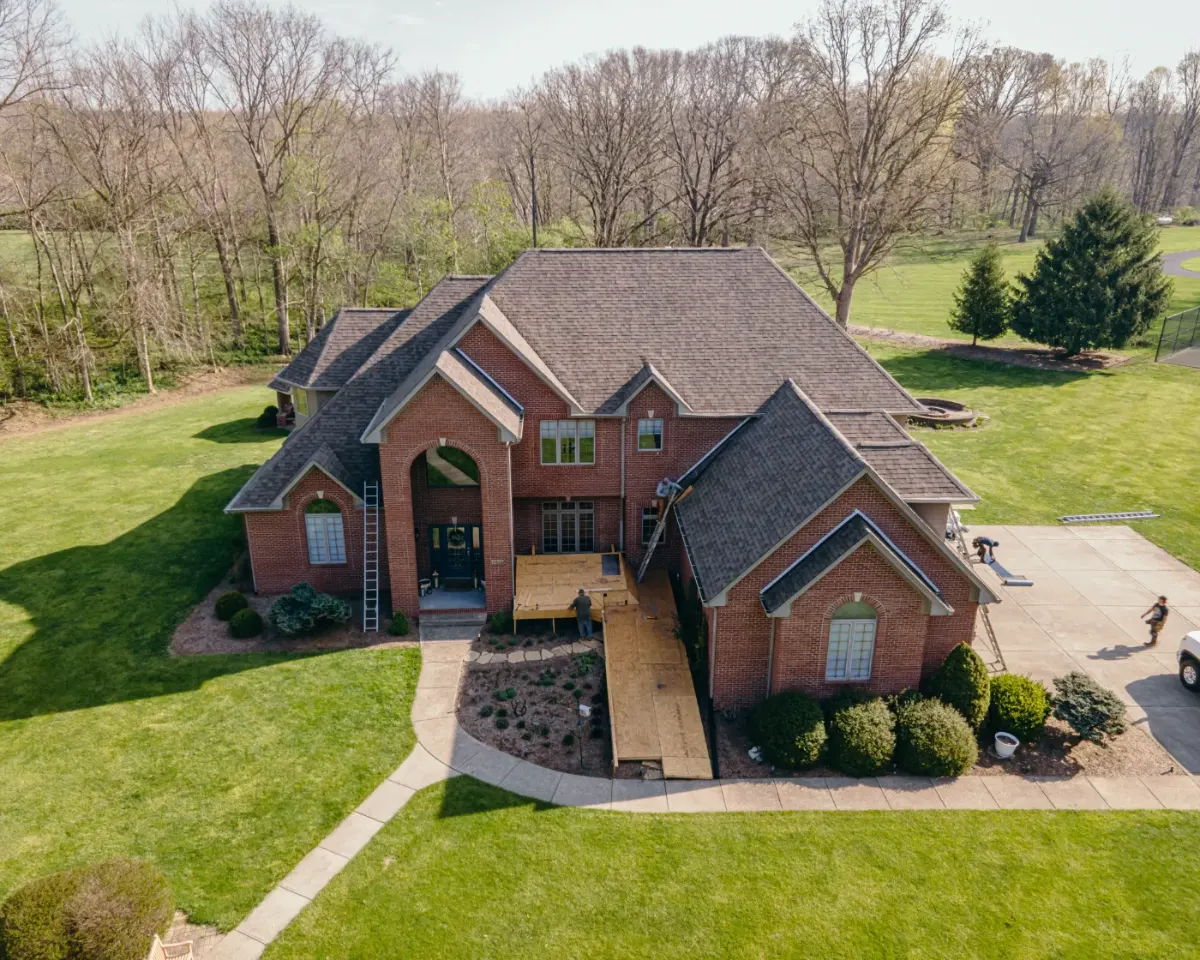
What we see most often on Heartland Crossing roofs
Heartland Crossing homeowners typically call us about these scenarios.
Granules Filling the Gutters
Heavy granule loss in Heartland Crossing gutters means the shingle mat is losing its UV protection, the last stage before brittleness and cracking. Some shedding is normal on a new roof; steady accumulation on a 15 year roof is a countdown. Heartland Crossing Roofing gives you a straight read on remaining life instead of an automatic replacement pitch.
Previous Repairs Done With Roofing Cement
A black smear over a flashing joint is a repair that hides the problem rather than solving it. The cement cracks, traps water behind itself, and the damage underneath keeps going. Heartland Crossing Roofing opens up sealed areas during inspection so you find out what was actually done to the roof before you bought the house.
Skylight Staining the Ceiling Below
A skylight that leaks is usually a flashing kit that has outlived the roof around it, not a failed unit. Heartland Crossing Roofing reflashes Heartland Crossing skylights to the manufacturer detail or replaces aged units with your sign off, and either way the decking around the curb gets checked while the opening is exposed.
Nail Pops Showing Through the Shingles
Decking expands and contracts through Heartland Crossing temperature swings until fasteners back out and tent the shingle above them. Each pop is a pinhole today and a stained ceiling in two years. Heartland Crossing Roofing resets the fasteners, reseals or replaces by condition, and photographs the pattern so next year has a baseline to compare against.
Missing or Lifted Shingles
A few missing tabs after a Heartland Crossing wind event usually mean the surrounding shingles broke their seal too, including the ones still lying flat. Spot replacing only what blew off leaves the slope open to the next front. Heartland Crossing Roofing checks seal integrity across the whole area and quotes the repair that actually holds through the next season.
Hail Damage You Cannot See From the Ground
Hail bruises the shingle mat and knocks granules loose without leaving obvious holes, and that damage ages a roof years ahead of schedule. In Heartland Crossing hail claims, documentation quality decides the outcome. Heartland Crossing Roofing maps impacts slope by slope with photos and attends the adjuster meeting so covered damage gets counted, not argued away.
Three Simple Steps
From free inspection to project completion, we follow a disciplined process on every Heartland Crossing roofing project.
Free Inspection
You choose a time that suits you. From there we go over the roof, take photos of the conditions we find, and explain what they mean in practical terms.
Transparent Estimate
The outline is written down: what work we recommend and the benefit each item brings to your property. There's no pressure, and we take the time to walk through options comfortably.
Quality Installation
Attentive work, timelines that hold, and respect for your property. The manufacturer warranty gets registered in your name by us.
What Heartland Crossing Concluded About the Roof
4.9 stars across 2,307+ Google reviews.
"Roof inspection for our home sale. The report was detailed enough that buyers accepted it as part of due diligence without ordering their own. Saved us about a week of closing time."
"Inspected our home before purchase. Caught two items we used in negotiation that saved us more than the inspection took to schedule. Plus the report gave us confidence the roof had real life left."
"Quick repair on storm damage that got us through hail season. They recommended a full inspection in spring which we have scheduled. No upsell on the immediate repair."
Frequently Asked on Heartland Crossing Roof Jobs
Straight answers to the questions Heartland Crossing homeowners ask most.
Indiana Weather Affects Roofs Year Round
Few states get weather as varied as Indiana. Over a year, Heartland Crossing homeowners see hail and hard thunderstorms in spring, UV beating down all summer, wind storms arriving in fall, and winter bringing freeze thaw cycles. We plan maintenance, repairs, and replacement work around those patterns.
Hail Bruising And Cracks
Supercell thunderstorms in the southwest Indianapolis corridor have dropped golf ball sized hail near Plainfield and Mooresville, and Heartland Crossing sits right in that path. Hail bruises the mat under the granules and can crack shingles outright, shortening the roof's remaining life. When called after a hail event, we look for round impact marks, mat exposure, and softened spots, then document everything for your claim.
Wind Lifting Shingles
Indiana thunderstorms regularly kick up 60 mph gusts, and the January 2024 low pressure system and March 2023 storm were reminders of what that does to roofs. Wind lifts the tab, breaks the sealant strip, and leaves the next row exposed to water. We check the edges, ridges, and any bald streaks after a high wind day and reseal or replace what needs it.
Ice Dams In Winter
When central Indiana snow sits on a Heartland Crossing roof and refreezes at the eaves, water backs up under the shingles and finds its way inside. Poor attic ventilation and thin insulation make it worse. We inspect vulnerable eave and valley areas, address damaged shingles and flashing, and note ventilation issues that are feeding the problem.
Granule Loss On Aging Roofs
Landscaped ponds and ornamental trees are part of what makes Heartland Crossing feel like Heartland Crossing, but the debris load speeds up granule loss on shingles that are already 20 plus years old. Once the granules go, UV eats the asphalt and the mat gets brittle. We check gutters for granule buildup and give you a straight read on remaining roof life.
Choosing the Right Roof for Heartland Crossing Homes
An honest breakdown of the three systems we install most frequently.
Architectural asphalt shingles are the workhorse choice for Heartland Crossing, and they are already spec'd on many of the newer D.R. Horton sections for good reason. They hit a strong balance of upfront cost, curb appeal, and dependable weather performance in central Indiana. Color ranges are wide, so matching an HOA approved palette through the Elite H.O.A. Management architectural review process is straightforward. Manufacturer warranties on architectural shingles are strong compared to older 3 tab products, and the dimensional look holds up nicely on the gable and hip roof designs common in the community. For most homeowners planning a full Heartland Crossing roof replacement, this is the sensible starting point.
Impact resistant Class 4 shingles are built to take the hail that bruises standard asphalt. Given the hail exposure across Heartland Crossing and the broader southwest Indianapolis corridor, they are worth a real look, especially if your roof has already been hit once. The reinforced construction typically extends granule life and holds up better through the spring storm season. Ask your insurance carrier whether your policy offers a premium credit for a Class 4 roof, because some policies do and some do not, and the answer varies by carrier and policy. We can walk you through the tradeoff on cost versus longevity during the inspection.
Standing seam metal is the longest service life option we install, with concealed fasteners that avoid the exposed screw failures cheaper metal panels run into. It sheds snow and ice cleanly, resists wind uplift well, and needs very little upkeep for decades. The tradeoff is honest: the upfront cost is meaningfully higher than architectural asphalt, and the look is not right for every Heartland Crossing home or every HOA approved palette. What you are buying is time, a roof that likely outlives the next two asphalt roofs combined, with far less maintenance in between. For the right home and the right owner, the math works.
What We Do Around Heartland Crossing
Roof Inspections
A roof inspection isn't a sales visit carrying a clipboard. Nobody sits at your kitchen table in Heartland Crossing running pressure tactics or quoting a price that expires when the door closes. It also isn't a promise that nothing will ever go wrong, because weather doesn't work that way.
What it is: an honest read of current condition from someone who works on roofs for a living. If your roof needs nothing, that is the answer you get, along with a rough sense of how many seasons remain before the conversation changes.
Roof Inspections in Heartland Crossing ›Roof Repair
Most repair calls trace back to a handful of triggers. A storm passes and you find pieces of shingle in the driveway. The bathroom fan starts dripping once it turns cold.
A branch comes down and takes a strip with it. Somebody's roofer knocks and announces that you have damage.
Each of those is worth checking, though the last one is worth checking twice. We look, we photograph, and we tell you whether there is a real problem on your Heartland Crossing roof or whether someone was hoping you would never climb up.
Roof Repair in Heartland Crossing ›Emergency Roof Repair
Urgent work still gets documented, and here it matters even more. Before anything is covered or moved, we photograph the damage exactly as we found it, wide enough to show the roof and close enough to show the failure. Those pictures become the record your carrier looks at, and they cannot be recreated once the tarp goes on.
You receive a written description of what was done to secure the roof, what it cost, and what the permanent repair will involve. Nothing about an emergency in Heartland Crossing should leave you guessing later.
Emergency Roof Repair in Heartland Crossing ›Roof Replacement
Roofs get replaced in Heartland Crossing through most of the year, though each season trades one advantage for another. Spring and fall bring mild temperatures, which shingles like, and also bring the crowds, which means booking further out. Summer means long days and fast work, with early starts to stay ahead of the heat.
Winter work is possible in a mild stretch, since sealant strips need warmth to bond and cold shingles crack when handled roughly. If your roof isn't leaking, we help you choose a window instead of rushing you into one.
Roof Replacement in Heartland Crossing ›Designer Roofing
A quote for this kind of roof spells out which profile you chose, what the underlayment and flashing package includes, how the ridge is finished, and what the warranty covers in plain words. Because the products cost more, the estimate separates material from labor so you can see exactly what the upgrade adds. If you are weighing a designer roof against a standard one in Heartland Crossing, we will write both, side by side, and let you sit with them.
No pressure attaches to either number, and neither expires. Most people find that seeing the two written out settles the question quickly.
Designer Roofing in Heartland Crossing ›Comparing Two Heartland Crossing Roofing Estimates
Put two bids side by side and the first thing to do is stop looking at the totals. Find the measured area on each.
If they differ meaningfully, one of them measured your roof and the other didn't, and no other comparison is worth making until you know which. Check the waste factor as well, since a cut-up roof needs a generous one and a bid that carries almost none is either working from a simple gable in someone's imagination or planning to run short.
Next, line up what's coming off. Both should state the number of layers being removed and both should include disposal. Then find the decking language.
You're looking for a rate and an included quantity in each. A bid that says decking replaced as needed has told you nothing, and the difference between the two totals may be sitting entirely in that sentence.
Work down through the assembly after that. Underlayment across the whole roof, membrane at the eaves and valleys, starter at eaves and rakes, the field material and its fastening pattern, hip and ridge, then every piece of flashing by location and whether it is new or reused.
Ventilation with intake and exhaust called out. Somewhere in there you'll usually find the real gap between two prices, and it's rarely in the shingle line that everyone shops.
Finally, compare the parts that aren't about the roof at all. Who is doing the work and whether they're employees, what the workmanship terms say and for how long, what the payment schedule looks like and whether anything is due up front, how change orders are handled, and whether a permit is included where your town requires one. When you have done all of that, the totals will make sense, and quite often the bid that looked expensive turns out to be the one that included what you were going to end up paying for anyway.
If you find a real gap and can't work out which bid has it right, take the question back to whoever wrote the cheaper one. How they handle it tells you as much as the answer does.
Roof Styles You'll Find on Heartland Crossing Streets
The oldest houses we work on most weeks are single story ranches and split levels from the sixties and seventies. They tend to have simple gable roofs, deep overhangs, and a deck built from spaced planks rather than sheet material. Plank decking holds up well as long as it stays dry, but the boards shrink over a few decades and the gaps between them open up.
A nail driven into one of those gaps holds nothing at all, so before we price a house like that, someone walks it and reads the deck through the shingles. That answer moves the scope more than anything else we find up there.
Two story colonials from the eighties and nineties are the next wave you see around here. The pitch gets steeper, the roof carries more area, and there's almost always a garage or family room roof running into a wall of the house. Sidewall and step flashing is where those homes give us trouble.
Siding frequently went on over the flashing instead of the other way around, and once water gets behind that joint it travels down inside the wall and stains a ceiling a room away from the actual hole. We open those areas up and reflash them instead of running a bead of sealant and hoping.
Newer subdivisions bring their own list. Rooflines got busier, with cross gables, dormers, and valleys that funnel water from several planes into one channel.
Every extra cut is a place where a rushed crew can hide a shortcut. Builder grade venting is often light for the attic volume underneath it, and a low slope porch or sunroom section usually got the same shingles as the steep part of the house, which is not what that pitch calls for.
Whatever the era, the order we check things stays the same. Ventilation comes first, since a hot damp attic cooks shingles from below and nothing installed over it lasts the way it should. Flashing is next, because that's where most leaks actually start.
Then we get to decking condition and how many layers are already up there. A homeowner in an older neighborhood and one out in a newer section usually need different work, and a written scope ought to show you why.
Why a Fall Look Pays for Itself
If you only have somebody up on your roof once, make it the fall. Everything that is about to be tested by winter is visible then, and every one of those items is cheaper to address while the weather is still mild.
A cracked collar around a plumbing stack is a quick job in October. The same collar in January, with a stain spreading on a bedroom ceiling, becomes an emergency call, a temporary patch, and then the real repair when it warms up.
A fall inspection is looking for a specific set of things. Sealant at the chimney and any sidewall, since those joints spent the summer expanding and contracting. Fastener condition and lifted tabs, which wind will find as soon as the systems start rolling through.
Valley wear, because valleys carry the melt in the spring and take the most abuse. And the gutters, which need to be clear before the first freeze so meltwater has somewhere to go instead of pooling at the eave and turning into ice.
The attic half matters just as much in the fall. Insulation that has drifted or been compressed, eave vents blocked by that insulation, a bath fan blowing moist air into the space, or a hatch that doesn't seal are all things that create ice at the eaves once the snow arrives. Every one of them is easy to fix in mild weather and impossible to reach comfortably when the attic is freezing and full of blown insulation dust.
The honest reason we push this is that winter leak calls are miserable for everyone. We do them, and we get people dried in, but a temporary repair on a cold roof isn't the same as a proper one, and the homeowner ends up paying twice. An hour in the fall usually prevents that entirely, and if it turns out your roof needs nothing, that is worth knowing too before the first hard freeze arrives.
Get the Answers in Writing in Heartland Crossing
Every question worth asking is worth finding on paper afterward, because the conversation in your driveway isn't what governs the job. The estimate is. So after you have asked who is on the roof, look for the answer somewhere in the document, even if it only shows up as the name of the lead or a line saying the work will be performed by company crews instead of assigned out.
The deck answer should appear as an allowance, written as a rate per board or sheet with a quantity included and a clear statement of what happens beyond it. If a roofer tells you decking is included and the estimate says nothing about quantity, those two statements aren't the same, and the second one is what you'll be holding when the argument starts.
The same goes for the hidden damage conversation. It should exist as a paragraph describing how you get notified, how you approve, and that no additional work happens before you do.
Warranty terms need to be attached to the paperwork, and having them described out loud isn't the same thing. Ask for the workmanship terms as an actual document with the length, the exclusions, and the transfer provisions spelled out, and ask which material coverage applies to the system being installed. Verbal warranty length is worth nothing at all, and the difference between what people remember being told and what the paper says is where most of the bad stories start.
Cleanup, permits, payment timing and the daily schedule belong there too. It does not have to be a long document. A single page can cover the whole of it if the person writing it has done this enough times to know where the trouble comes from.
What you're really testing when you ask for things in writing is not the answer itself. It's whether the company is comfortable being held to what they told you, which is the only part of any of this you can rely on later.
The Attic Half of a Roof Inspection
Half of what we learn about a roof, we learn from underneath it. The shingles tell you how the surface has weathered. The attic tells you why, and it is the part most inspections skip because it takes time and nobody enjoys crawling through insulation on a warm afternoon.
With a light, we look at the underside of the sheathing for dark staining, which maps out where moisture has been sitting even when there's no active drip. Rusted nail tips point to condensation rather than a leak, and the difference matters enormously, because a condensation problem will ruin a new roof just as surely as it ruined the old one.
We check whether insulation has been packed into the eaves and choked off the intake, whether baffles exist at all, and where the bath and kitchen fans actually terminate. A fan dumping into the attic is one of the most common things we find and one of the cheapest to correct.
We also read the framing. Sagging between rafters, previous repairs, added weight from a second layer of covering, or a spot where somebody set a foot through and patched it from above. Any of that changes the scope, and it's far better known before you sign than discovered on tear-off day.
If your house has no attic access, or the ceilings are finished right up to the deck, we say so and adjust. In that case a moisture reading from below, a careful look at the soffit and ridge from outside, and a closer study of how the surface has aged carry more weight.
It is a slightly less complete picture, and we'll tell you it's less complete instead of pretending otherwise. Where the attic is only partly reachable, we get as far in as we safely can and note which sections of the deck we were able to see and which we were not, so the report reflects what was actually looked at.
More Heartland Crossing Questions, Answered Plainly
Where We Have Worked in Heartland Crossing
Every neighborhood in and around Heartland Crossing where we've done roofing work is listed here. Click through for what our crews learned on those roofs.
Where we respond near Heartland Crossing
Indiana-licensed crews dispatched to Heartland Crossing and the closest surrounding communities.

Roofing Systems Compared in Heartland Crossing
Quick reference for the four residential systems we install most often. Pricing reflects typical Heartland Crossing installations.
These are typical ranges in the Heartland Crossing market as of 2026. Where an upper number carries a plus sign, inspection findings can push your project past that maximum. The written scope and quote cost you nothing.
Heartland Crossing Roofing is powered by Indy Roof & Restoration
That name matters here: the license, the crews, and the warranty behind this site all belong to Indy Roof & Restoration. This is home turf: Indy Roof & Restoration has run central Indiana routes since 2018 and knows Heartland Crossing down to the cul-de-sacs. At 4.9 stars across 2,307+ verified Google reviews, Indy Roof & Restoration ranks among the most reviewed and highest rated contractors in central Indiana.
Licensed and insured · License #RC21100059
The company's credentials: Owens Corning Preferred Contractor, Malarkey Certified Contractor, BBB A+ Accredited and Google Google Guaranteed. Outlets like FOX59, WISH TV, and RTV6 have told their story.
Expert Heartland Crossing Roofing Crews Available Now
Whether a spring storm just rolled through Heartland Crossing, your shingles are showing their age, or you are simply planning ahead on a roof that has been up there since the early 2000s, now is a good time to get eyes on it. Schedule a free inspection with Heartland Crossing Roofing, no obligation, and we will document everything you need for your claim.